The Ortega Reference

The world’s finest shirtings.

The enduring elements of fine shirting: fibre, yarn, weave and finish.

A matter of judgment

Fine shirting is made through judgment.

Fine shirting comes from a precise balance of fibre, yarn, weave and finishing. Each decision should serve the intended shirt: its hand, structure, weight, performance and character. Quality resides in the specification, the consistency and the way the cloth works for the cutter, maker and wearer.

01

Fibre is the starting point.

Fine shirting begins with the right fibre for the yarn and construction in view. Staple length, uniformity, strength and micronaire are measurable properties that shape yarn regularity, strength and spinning efficiency.

02

Yarn count describes size, not merit.

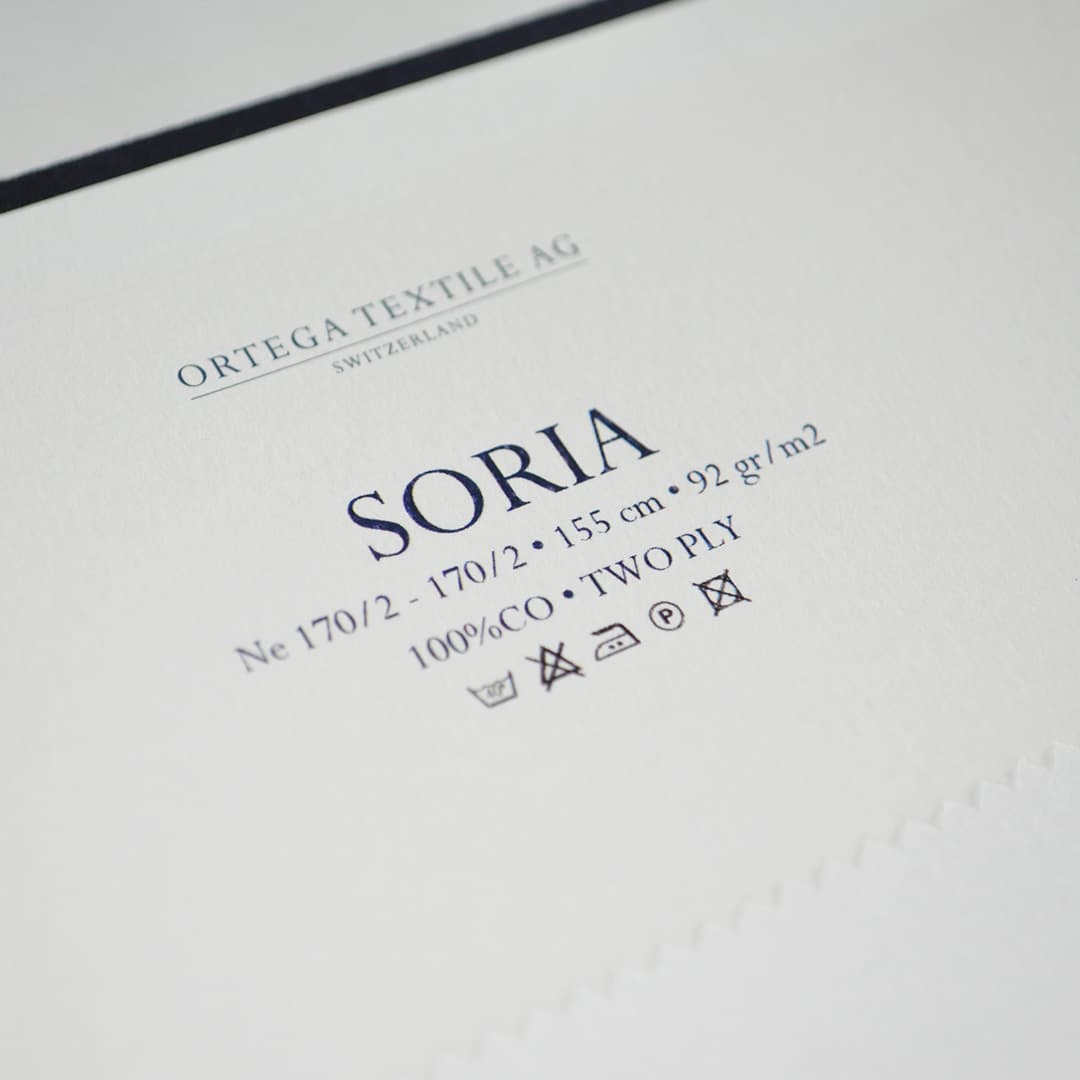
Ne, or English cotton count, describes yarn linear density. A higher Ne number denotes a finer, lighter yarn. Ply adds strength and evenness where the cloth requires it. What matters is the coherence of fibre, spinning, twist and ply with the cloth’s intended hand, weight and durability.

03

Weave gives the cloth its language.

Construction gives a shirt its visual and tactile character. A clean poplin, diagonal twill, textured Oxford, warp-dyed denim and airy voile each make different demands of the yarn and give a garment a different presence. The considered choice is the weave that serves the intended shirt.

04

Finishing completes the material.

Finishing has a direct bearing on hand, surface and the way cloth is experienced after it leaves the loom. It should be judged as part of the complete material system rather than as a marketing label. The right finishing respects the construction beneath it and gives the shirtmaker a reliable, legible cloth to work with.

05

Performance, considered.

Performance is established through appropriate methods, clear scope and the relevant fabric. Colourfastness, dimensional change, wrinkle recovery and wash performance should be read in that context. In fine shirting, clarity of specification and documentation supports dependable decisions.


How Ortega applies the standard

A focused repertoire for shirtmakers.

CABALLERO is a composed repertoire for shirtmakers: each fabric family is developed for a distinct expression of the shirt, from formal precision to relaxed texture and warm-weather clarity.

Formal precision

Fine, composed poplins for clear surfaces and an exact dress-shirt expression.

Daily structure

A balanced poplin and a softer twill for shirts that need a natural, dependable rhythm.

Texture and ease

Oxford and warp-dyed shirting denim for visible weave, depth and relaxed character.

Warm-weather clarity

A lightweight voile for dry hand, breathability and poised summer shirting.

The useful question

A cloth precisely chosen for the shirt.

Fine shirting is recognised in the coherence of fibre, yarn, weave and finishing—and in the way the cloth serves the shirtmaker’s intended result. CABALLERO brings these decisions together in a concise repertoire for distinct occasions, hands and wardrobes.

Explore the collection

Ortega reference notes

  1. Fibre qualityStaple length, uniformity, strength and micronaire inform the choice of fibre for a given yarn and construction.
  2. Yarn constructionLinear density, Ne cotton count and ply describe how a yarn is specified for the cloth it is intended to make.
  3. Measured cotton characteristicsFibre length, uniformity, spinning behaviour and yarn quality are assessed as connected technical properties.
  4. Textile performanceColourfastness, laundering, dimensional change and wrinkle recovery are meaningful when read against the relevant method and fabric.